Hiring a Voice Actor
5 min read

What to Include in a Voiceover Script Before You Send It

Before you send a script to a voice actor, a few small details can make the whole project go faster and smoother. Here's what's actually helpful to include.

Published on
June 5, 2026
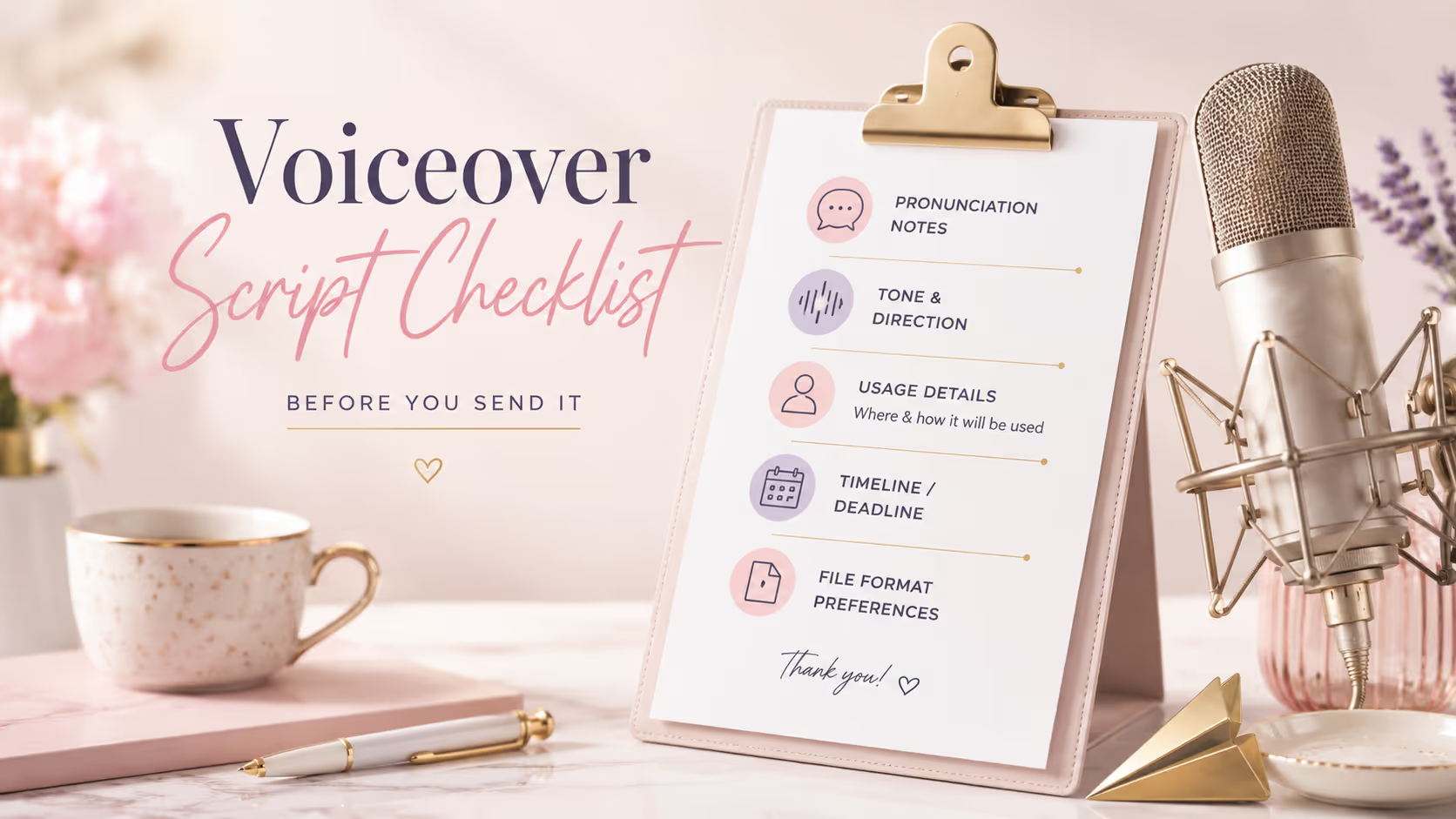
Voiceover script checklist with pronunciation notes, tone direction, usage details, timeline, file format preferences, and studio microphone

Read More Articles

Voiceover usage rights blog image with studio microphone, licensing document, calendar, audience, and media icons
What Does Usage Mean in Voiceover?
Read Article
Live-directed voiceover session with client video call, audio waveform, and professional recording setup
How Live-Directed Sessions Work and Why They Help
Read Article
Broadcast quality audio blog image with studio microphone, sound treatment, and waveform editing on a laptop
What Does Broadcast Quality Actually Mean?
Read Article

What to Include in a Voiceover Script Before You Send It

You've got a project. You know you need a voice actor. You're almost ready to reach out, but you're not sure if your script is in the right shape to send over yet.

Here's the good news: it does not need to be perfect. But a few small things in the right place make a big difference in how smoothly the project goes and how accurately you get quoted.

The script itself

This one seems obvious, but it's worth being specific about what "ready to send" actually means.

A script that's ready for voiceover is finalized, approved, and not likely to change after recording begins. That does not mean it needs to be formatted a certain way or written to a specific length. It just means the words are locked.

Scripts that are still being revised after recording has started create extra work on both sides. Changes to wording, added lines, or restructured sections after the session may require re-recording, which affects both the timeline and the quote. The closer to final your script is when you reach out, the smoother everything goes.

If you're not quite there yet, that's fine too. Reaching out with a draft is completely reasonable, and a quote can still be discussed before the script is fully locked. Just be upfront about where things stand.

Pronunciation notes

If your script includes brand names, product names, industry-specific terminology, acronyms, or proper nouns that have a specific pronunciation, include those notes with the script.

This is one of the most commonly skipped steps and one of the easiest to address. A quick note that tells the voice actor how to pronounce something correctly saves a revision round and gets you cleaner files the first time.

If you're not sure how to write out a pronunciation, a phonetic spelling works fine. So does a link to a reference clip or a note that says "rhymes with X."

Tone and direction

A script tells a voice actor what to say. Direction tells them how to say it.

You don't need a detailed brief or formal creative direction to include useful tone notes. A few sentences about the intended feel of the piece is usually enough. Some examples of what's helpful:

  • "This should feel conversational and warm, like a knowledgeable friend explaining something."
  • "We want this to sound confident and direct. Not aggressive, but authoritative."
  • "The tone should match our brand voice, which is approachable but professional."
  • "Think late-night TV ad energy. Punchy and a little fun."

If you have a reference clip of another piece of content that captures the right feel, include it. Voice actors use reference audio well and it can communicate tone faster than words sometimes.

Usage and project details

As covered in an earlier post, usage is one of the main factors that affects voiceover pricing. Including a few key details upfront means the quote you receive reflects the actual scope of the project.

Helpful details to include:

  • Where the voiceover will be used (broadcast, digital, internal, social, etc.)
  • How long it will be used or whether you need a buyout
  • Whether it's for paid media or organic use
  • The intended audience size or distribution

You don't need to have every answer. But the more context you can provide, the more accurate and complete your quote will be.

Your timeline and deadline

If you have a specific delivery date in mind, include it. Rush timelines may be accommodatable but it helps to know early. If your deadline is flexible, say that too. It gives more room to work with on scheduling.

A note about turnaround: the clock on delivery generally starts once the script is finalized and the project is booked, not from the moment you first reach out. If your timeline is tight, reaching out sooner rather than later with even a draft script gives more lead time to work with.

File format preferences

If you have specific requirements for how the final audio should be delivered, include those upfront. Common things to note:

  • File format (WAV, MP3, or both)
  • Whether you need raw audio or edited and cleaned files
  • File naming conventions if you have multiple prompts or lines to be delivered separately
  • Any technical specs required by your platform or broadcast destination

If you're not sure what format you need, that's fine to say. A recommendation can be made based on how the audio will be used.

You don't need everything figured out before reaching out

The list above covers what makes a project go smoothly from start to finish. It is not a checklist you have to complete before you're allowed to send an email.

If you have a project in progress and you're not sure what you need yet, reaching out with what you have is completely fine. A good voice actor will ask the right questions to fill in the gaps and help you figure out the rest.

If you're ready to get started or want to talk through a project, send over what you've got.

Request a Voiceover Quote

Have a project in mind? I'd love to help bring your script to life with a voice that connects.

Vanessa Osborne, conversational U.S. female voice actor