Voiceover for Business
5 min read

AI Voice vs. Human Voiceover: What's Actually at Stake for Your Brand?

AI voice has its place, but for brand-facing content, the stakes are higher than most businesses realize. Here's a practical look at what's actually different.

Published on
June 4, 2026
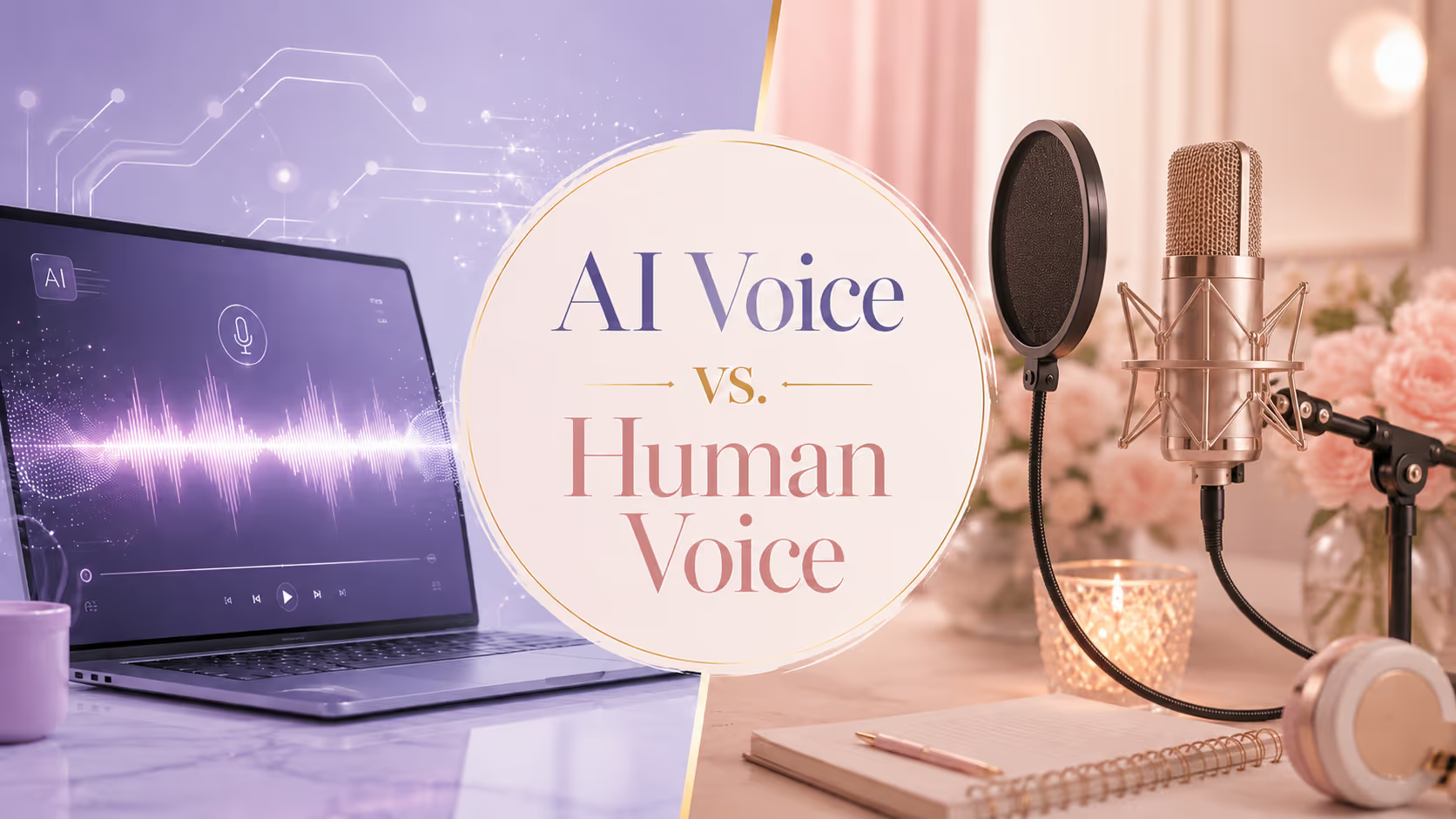
AI voice versus human voiceover comparison with digital audio waveform on laptop and professional studio microphone

Read More Articles

Voiceover script checklist thumbnail with microphone, pronunciation notes, direction, usage details, deadline, and file format preferences
What to Include in a Voiceover Script Before You Send It
Read Article
Voiceover usage rights blog image with studio microphone, licensing document, calendar, audience, and media icons
What Does Usage Mean in Voiceover?
Read Article
Live-directed voiceover session with client video call, audio waveform, and professional recording setup
How Live-Directed Sessions Work and Why They Help
Read Article

AI Voice vs. Human Voiceover: What's Actually at Stake for Your Brand?

AI-generated voice technology has come a long way. If you've listened to a podcast ad recently, watched a product demo, or called a customer service line, there's a good chance you've already heard it without realizing it. The quality has improved significantly, and the conversation around when to use it is a legitimate one.

So let's have it. Not as a debate, but as a practical look at what's actually different, what's actually at stake, and how to think about the decision for your brand.

Why Brands Are Turning to AI Voice (And What They're Trading Away)

AI-generated voice has become more accessible and more affordable, and it's easy to see the appeal. Fast turnaround, low upfront cost, and no scheduling required. For brands under pressure to produce content quickly and at scale, it can feel like a practical shortcut.

But convenience and quality are not the same thing. And for content that actually represents your brand to the people you're trying to reach, the tradeoffs that come with AI voice are worth understanding before you commit to it.

Where it falls short

The challenge comes when AI voice is used not because it's the right tool, but because it's the convenient one. And for brand-facing content, the difference tends to show.

Authentic emotion is harder to fake than it sounds. Human voices carry micro-variations in tone, breath, rhythm, and delivery that communicate emotion in ways listeners register without consciously identifying. A voice actor performing a line about something that should feel urgent, warm, playful, or reassuring brings real performance to that moment. AI voice generates a statistically probable version of what that should sound like. The gap between those two things is subtle, but it's real. And audiences feel it even when they can't name it.

Nuance and direction are still a challenge. If you need a voice that sounds like a trusted friend rather than a professional announcer, or something that feels conversational but authoritative, or warm but not saccharine, a skilled voice actor can find that. You can give direction, get takes, and refine the performance until it's exactly right. With AI voice, you're working within the parameters of what the tool can produce. The ceiling is lower and the floor is less predictable.

It can signal that the audience wasn't worth the investment. This is the part that's hardest to quantify but worth taking seriously. Audiences are increasingly good at detecting AI-generated content. For some brands, that's fine. For brands where trust, warmth, and human connection are part of the value proposition, using an obviously synthetic voice in customer-facing content sends a signal. Whether that signal is a problem depends entirely on your audience and what they expect from you.

The brand risk worth considering

Beyond the quality question, there are a few practical risks that don't always make it into the AI vs. human conversation.

Consistency over time. AI voice platforms update their models. The voice you use today may sound noticeably different from the version available in a year. For brands that have built audience recognition around a specific sound, that inconsistency is a real problem.

Licensing and usage rights. The legal landscape around AI-generated voice is still developing. Questions around ownership, usage rights, and liability for AI-generated content are not fully settled. Working with a human voice actor and a clear service agreement gives you defined ownership and rights from the start.

Platform and audience reception. Some platforms, audiences, and industries are more sensitive to AI voice than others. Healthcare, education, financial services, and anything involving vulnerable or discerning audiences tend to require a higher standard of authenticity. Knowing your audience's expectations matters here.

How to think about the decision

The most useful frame is not AI versus human as a blanket rule. It's about matching the tool to the stakes involved.

For internal, temporary, or high-volume low-stakes content, AI voice can be a practical choice. For anything that represents your brand publicly, builds customer relationships, or asks your audience to trust you, human voiceover is still the stronger investment.

The question worth asking is not just "can AI do this?" It's "what do I want this to communicate about my brand, and what's the best way to get there?"

What professional voiceover actually gives you

When you work with a professional voice actor, you get a performance, not a generation. Someone who has trained to communicate specific emotions and intentions through voice, who can take direction, adjust in real time, and bring something to the material that wasn't there before.

You also get clean, broadcast-quality audio delivered on your timeline, with defined rights, consistent quality across every project, and a collaborator who is invested in getting it right.

For brands that care about how they sound, that still matters.

If you're weighing your options for an upcoming project and want to hear what professional human voiceover sounds like for your use case, take a listen to my demos or get in touch to talk it through.

Request a Voiceover Quote

Have a project in mind? I'd love to help bring your script to life with a voice that connects.

Vanessa Osborne, conversational U.S. female voice actor